Missing teeth affect far more than appearance. They change how you chew, speak, and feel about smiling in public. Dental implants are widely considered the most reliable way to permanently replace missing teeth, restoring both function and confidence. Here’s a complete guide to how dental implants work, who they’re for, and what to expect from treatment at Cliffside Family Dentistry in Cliffside Park, NJ.
What Is a Dental Implant?
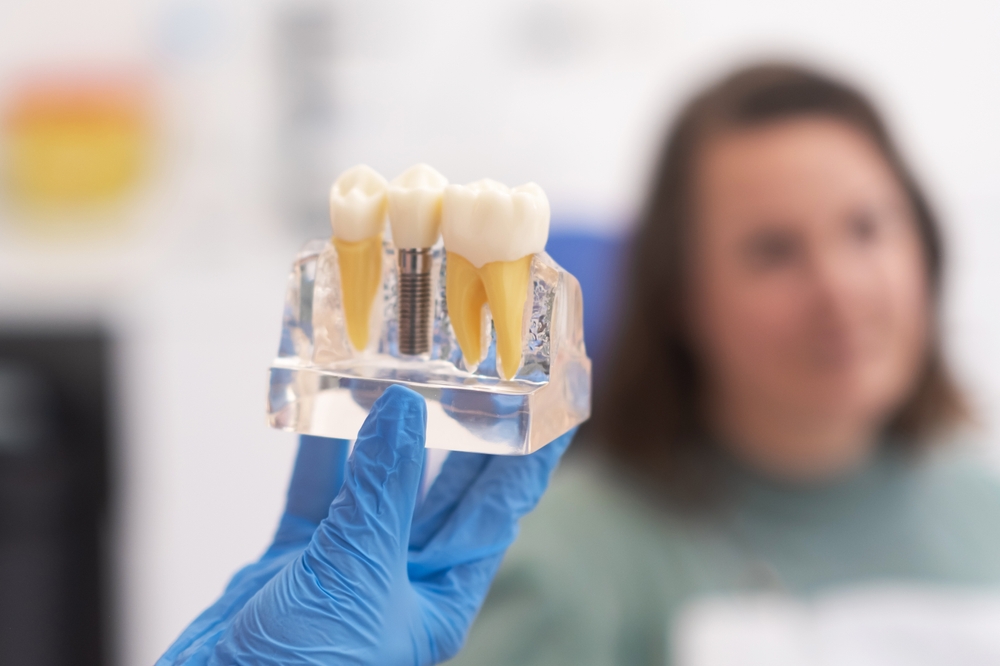
A dental implant is a permanent tooth replacement built from three parts: a titanium post that’s surgically placed into the jawbone, an abutment that connects the post to the visible restoration, and a crown, bridge, or full-arch prosthesis that completes the smile. Once placed, the post fuses with the jawbone through a process called osseointegration, creating a stable foundation that functions much like a natural tooth root.
How Are Dental Implants Different from Other Tooth Replacement Options?
Traditional bridges and dentures typically rely on surrounding teeth or the gums for support. Dental implants are different because they’re anchored directly in the jawbone, which means they don’t rely on neighboring teeth and don’t shift or slip the way removable dentures can. Because the implant post stimulates the jawbone the way a natural tooth root would, implants also help preserve bone density instead of allowing it to gradually shrink, which is a common issue with missing teeth and traditional dentures.
What Are the Benefits of Dental Implants?
Dental implants offer a combination of function and long-term health benefits that other tooth replacement options can’t fully match. They restore close to full chewing strength, look and feel like natural teeth, and help maintain facial structure by preserving jawbone density. They also prevent the shifting of neighboring teeth that often follows tooth loss, and with proper care, they’re built to last for decades rather than needing frequent adjustment or replacement.
What Dental Implant Options Are Available?
Dental implants are versatile enough to replace anything from a single tooth to a full arch, and the right option depends on your specific needs.
Single dental implants replace one missing tooth without affecting the health of the surrounding teeth.
Implant-supported bridges replace several missing teeth in a row using a small number of implant posts.
All-on-4® full-mouth dental implants replace an entire arch of missing or failing teeth using as few as four strategically placed implants, offering a fixed, permanent alternative to removable dentures.
A full breakdown of these options is available on Cliffside Family Dentistry’s implant options page.
Am I a Candidate for Dental Implants?
Good candidates for dental implants generally have healthy gums and enough bone density in the jaw to support the implant post. That said, bone loss or gum disease doesn’t automatically rule someone out. In many cases, these issues can be addressed with supportive treatment, such as bone grafting or periodontal care, before implants are placed. The most reliable way to find out is a consultation that includes a thorough oral evaluation and imaging. Learn more on the candidacy page, or schedule an evaluation directly.
What Happens During the Dental Implant Process?
Treatment generally unfolds in a few key stages. It starts with a consultation that includes a full oral exam and advanced imaging, such as CBCT scanning, to evaluate bone structure and plan the ideal placement for each implant. From there, the implant post is surgically placed into the jawbone. Over the following months, the post fuses with the surrounding bone through osseointegration, creating a strong, stable foundation. Once healing is complete, a custom-made abutment and final restoration, whether a crown, bridge, or full-arch prosthesis, are securely attached to complete the smile.
Dr. George Dawoud brings advanced surgical training in implant placement and full-mouth reconstruction to every case, supported by digital tools like CBCT scanning, intraoral scanners, and photogrammetry that improve precision throughout the process.
Does Getting Dental Implants Hurt?
Most patients describe the implant procedure as far more comfortable than expected, thanks to modern surgical techniques, precise digital planning, and sedation options for those who want extra comfort. Mild soreness for a few days after surgery is common, but the bulk of the healing process is generally painless. Once fully healed, implants provide lasting comfort without the irritation that can come with ill-fitting dentures.
How Much Do Dental Implants Cost?
Cost varies depending on the number of teeth being replaced, whether supportive procedures like bone grafting are needed, and the type of restoration involved. While implants typically cost more upfront than dentures or bridges, they often prove more cost-effective over time since they don’t require the frequent relines, adjustments, or replacements that removable options need every several years. Cliffside Family Dentistry offers financing options to help make treatment accessible. Full details are available on the implant cost and affordability page.
How Do I Care for Dental Implants?
Caring for dental implants is straightforward: brush and floss just as you would natural teeth, and keep up with regular dental checkups so your dentist can monitor the implant’s health over time. More detailed guidance is available on the implant maintenance page.
Frequently Asked Questions
How long do dental implants last? With proper care, dental implants are designed to last for decades, and many patients enjoy them for the rest of their lives without needing replacement.
Can I get dental implants if I’ve had bone loss? Often, yes. Bone loss doesn’t automatically disqualify a patient. Supportive procedures like bone grafting can build a stable foundation before implant placement.
Are dental implants noticeable? No. Implant restorations are custom-designed to match the shape, size, and color of your surrounding natural teeth, so they blend in seamlessly.
What’s the difference between a single implant and All-on-4? A single implant replaces one missing tooth, while All-on-4 uses as few as four implants per arch to support a full, fixed set of replacement teeth for patients missing most or all of their teeth.
Is dental implant surgery safe? Yes. Dental implants have a strong, well-documented success rate, and advanced imaging and planning tools help minimize risk during placement.
Will insurance cover dental implants? Coverage varies by plan. Cliffside Family Dentistry can help review your insurance benefits and discuss financing options to make treatment more affordable.
Ready to Learn More?
Every implant journey starts with a personalized evaluation. The team at Cliffside Family Dentistry serves patients throughout Cliffside Park, Edgewater, Fort Lee, Fairview, Ridgefield, Palisades Park, Leonia, North Bergen, Union City, Weehawken, Englewood, and Teaneck, NJ. Schedule a consultation today or call (201) 941-5800 to find out if dental implants are right for you.